From first advance to financial partner: the quiet power of renewals
What is a renewal and how does it work?
A renewal is a recurring financing offer made available to a merchant who has already taken an advance and repaid part or all of it. To qualify, the merchant must have paid off at least 60% of the previous advance and be on track with payments.
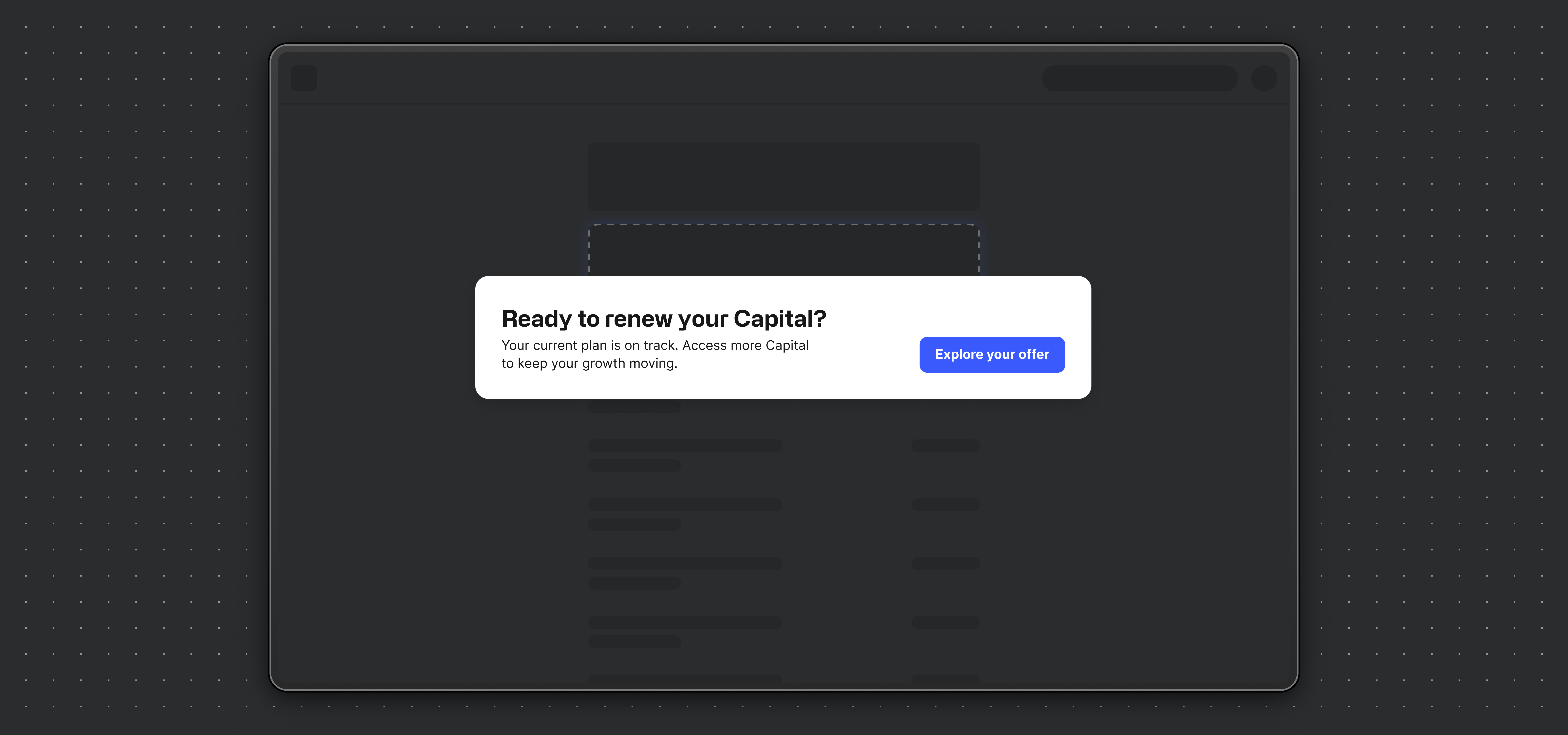
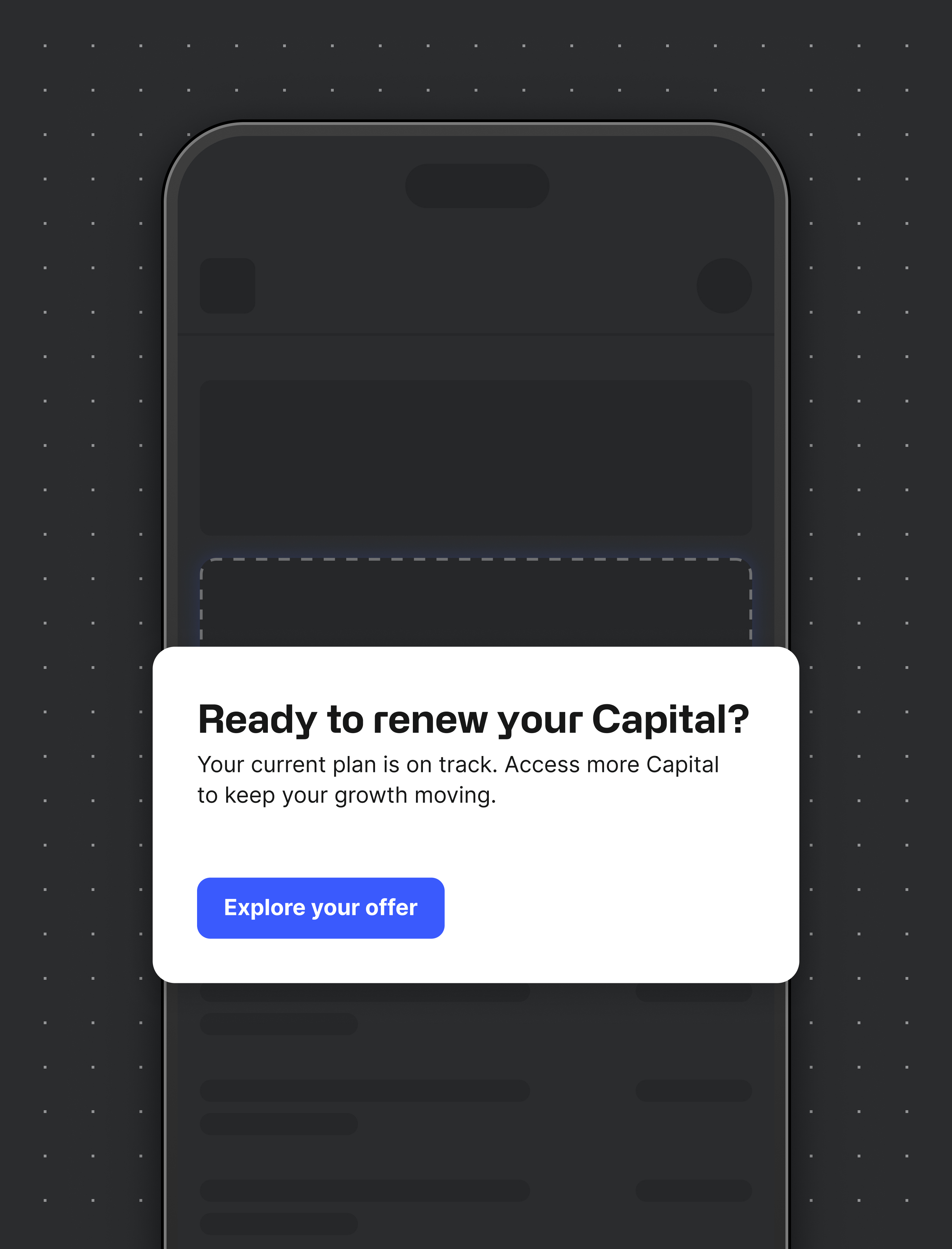
Once that threshold is met, a pre-approved renewal offer becomes available in the merchant's dashboard. All the merchant needs to do is accept it.
Why are renewals attractive for merchants?
Renewals usually come with larger limits and better terms than the first advance. The first advance is based mainly on the merchant's sales performance on the platform. At renewal, repayment history adds another layer of insight into the merchant's behaviour, and as that information accumulates, the limits and terms get better.
Renewals also turn capital into a reliable and continuous financial resource the merchant can plan around. Rather than going to a bank every time a need for capital arises and risking a rejection, the merchant finds the next offer already waiting in their dashboard. They can see what they qualify for before they need it, plan their cashflow around what is available, and accept the offer at the moment it fits the business.
Renewals are more powerful than platforms think
The first advance gets most of the attention in any embedded lending programme. It is the launch milestone. Renewals are quieter, and that is why they tend to be underestimated. But the renewal cycle is where two things compound over time: a long-term financial relationship with merchants, and the economics of the lending programme itself.
Renewals turn a one-off funding event into a long-term financial relationship between platform and merchant. The platform becomes something more: a financial partner. Around 80% of merchants who take a first advance and qualify for a renewal take it. It makes the platform, not a bank, the default place a merchant goes for capital.
Renewals also support the growth of the platform itself. Three things happen at every renewal:
-
1.
Renewals increase merchant stickiness. A merchant who is paying back an advance is more likely to use and transact on the platform for the duration of the repayment cycle. According to an independent study by Forrester, embedded lending reduces merchant churn by 70%.
-
2.
Renewals increase merchants' sales activity on the platform. Capital is rarely taken for its own sake. Merchants use it to buy stock, hire, expand, or weather a slow month, and the activity that follows runs through the platform. Each renewal injects more capital into the merchant's operations, which means more transactions on the platform. According to the same Forrester study, merchants using embedded lending see up to 20% sales uplift, which feeds directly into platform GMV.
-
3.
Renewals improve the economics of the lending programme itself. A healthy embedded lending programme needs consistent repayment behaviour from merchants. Renewing merchants have already shown they can repay reliably. That reliability lets the lending partner extend more capital across the platform's merchant base, and the platform earn its mark-up on every advance. The healthier the programme, the more it grows the platform's embedded lending revenue.
Beyond the first advance
A successful lending programme is not measured by how many merchants take a first advance. It is measured by how many keep coming back, and how often the platform is the first place they think of when they need capital. Renewals are how that happens.
Curious to see how embedded lending could work for your platform? Book a demo.
finmid is the embedded lending infrastructure powering platform growth. With its API, finmid enables platforms to launch tailored financing products for their business customers at scale. Across industries, borders, and business models, finmid drives revenue, improves retention, and fuels core business growth. finmid is trusted by Europe’s most ambitious platforms, including Wolt, Delivery Hero, Just Eat Takeaway, Glovo, and FREENOW. Learn more at finmid.com.