A merchant accepts a financing offer inside their platform dashboard. It looks like the platform built it. The font matches. The colours match. finmid’s name is nowhere to be seen.
That is what an iframe integration looks like from the outside. finmid’s iframe lets platforms put a fully branded financing experience inside their product without writing the flow themselves.
For most platforms, the iframe is the right starting point: fast to launch, low to maintain, and built to stay inside the product where merchants already are.
What is an iframe?
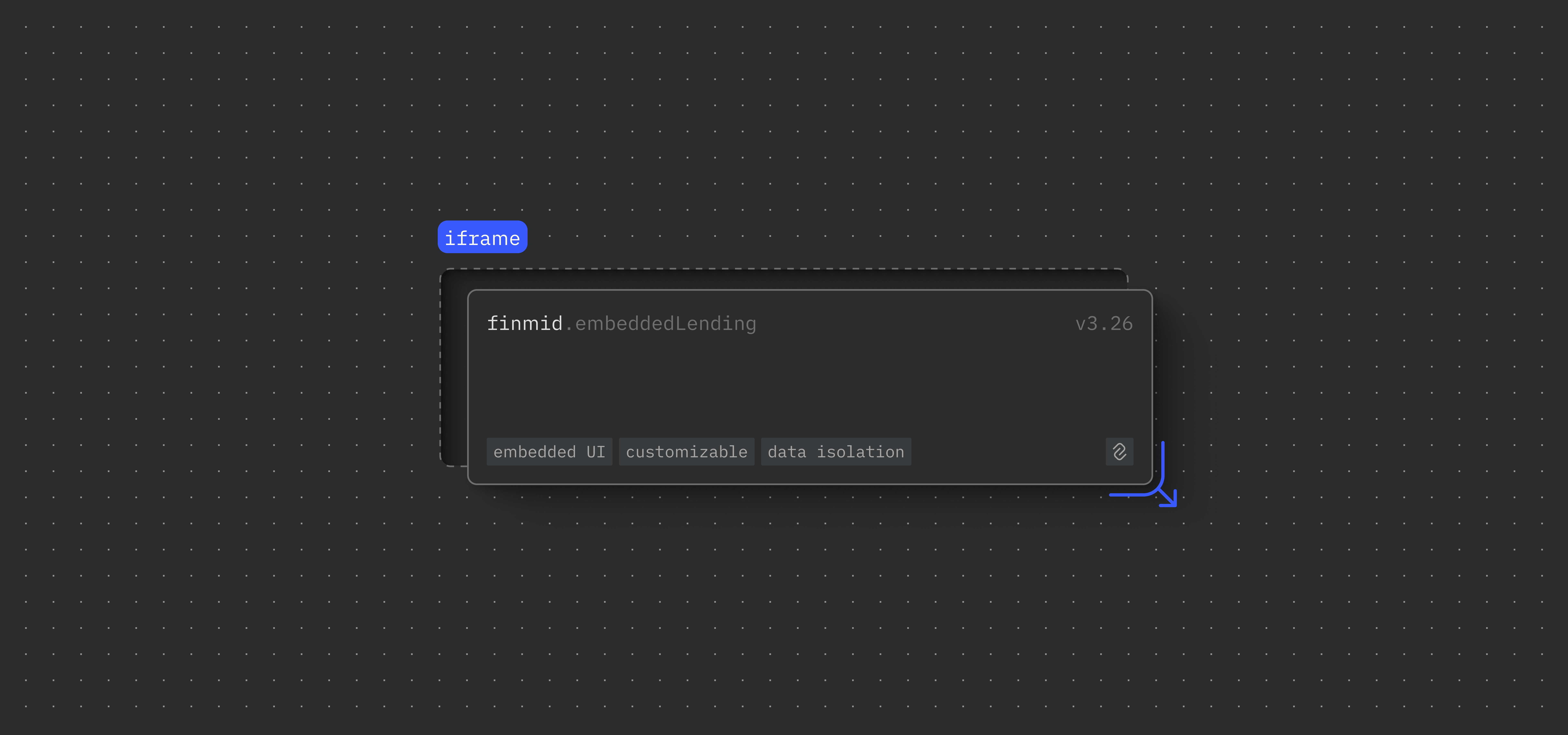
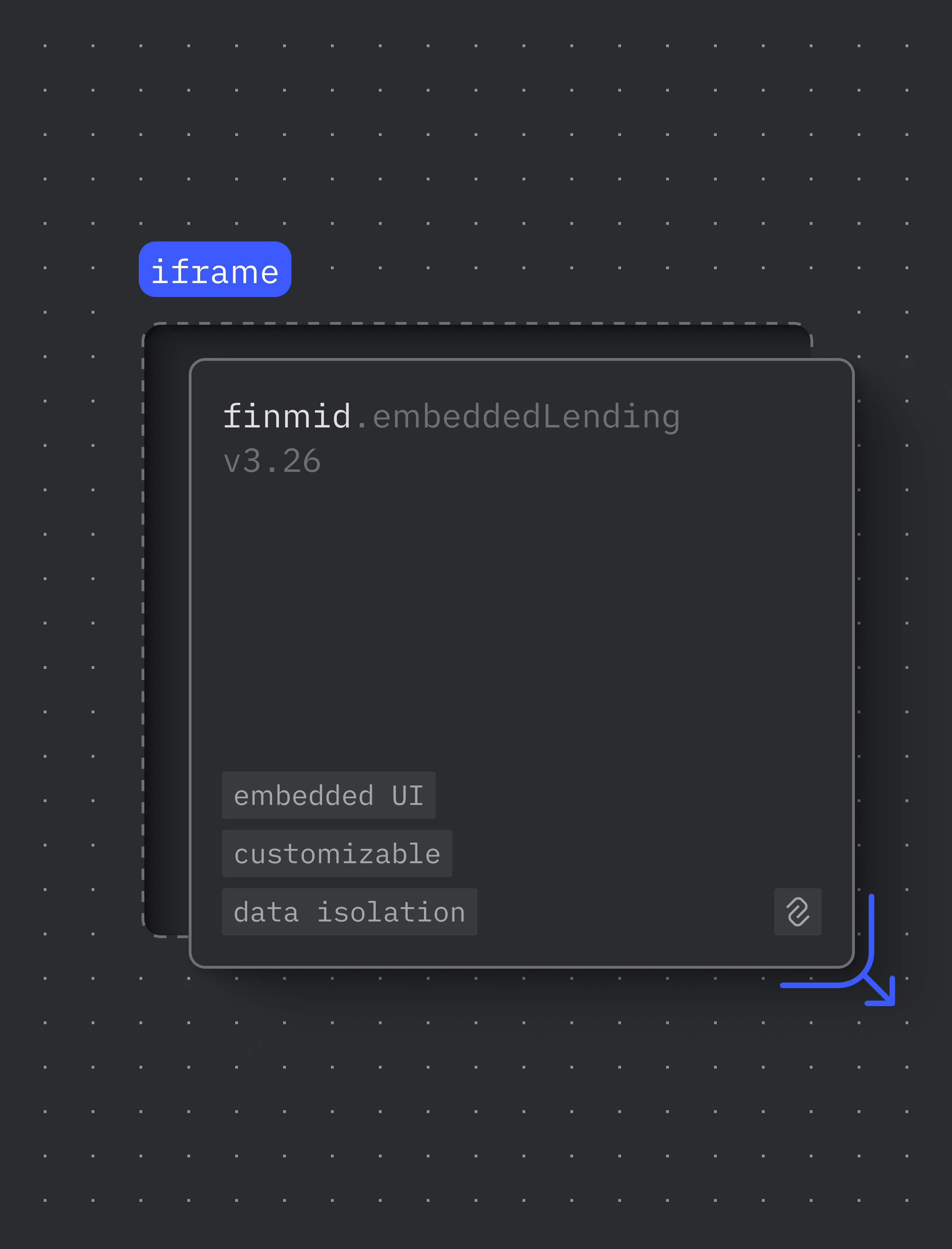
An iframe (inline frame) is an HTML element that embeds one webpage inside another. The user sees one seamless page. Technically, two separate systems are running.
Put in simple terms, an iframe is a window inside a webpage. Think of it like a picture frame on a wall. The wall belongs to the platform. The picture inside it, the financing flow the merchant interacts with, belongs to finmid.
How does an iframe work?
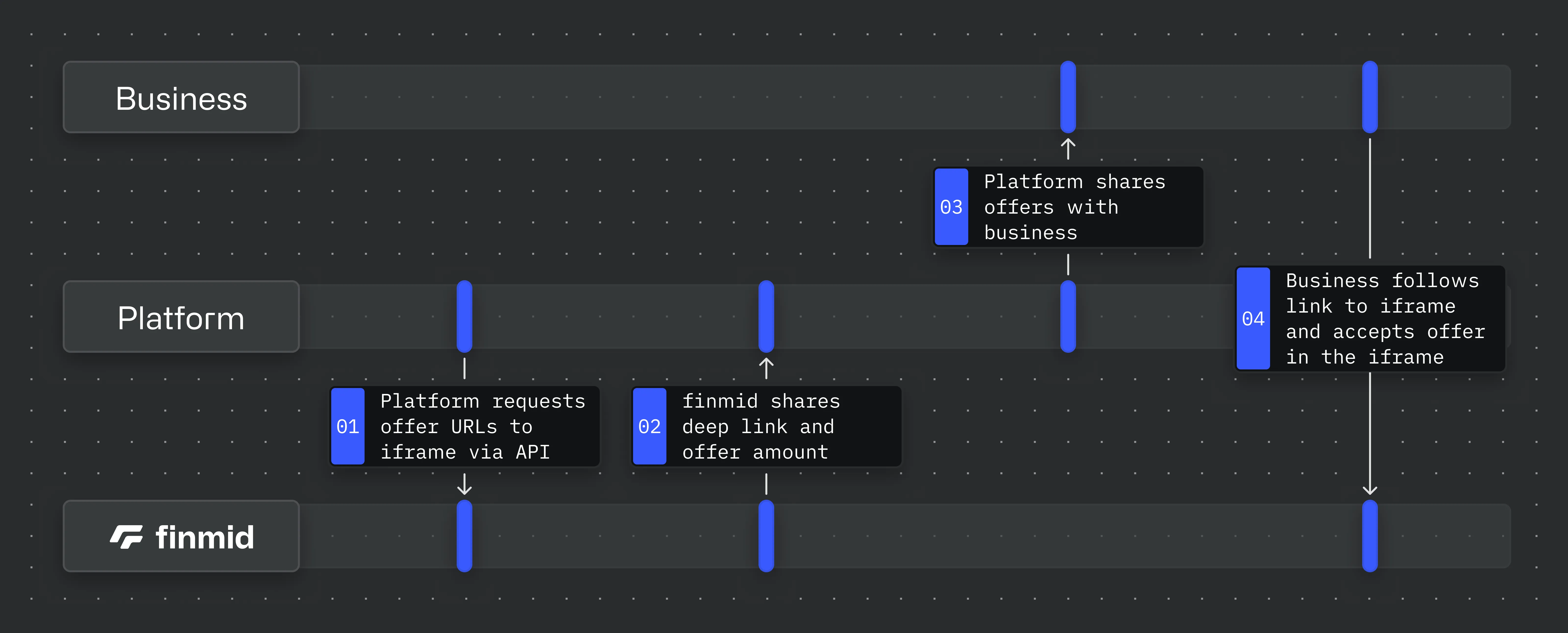
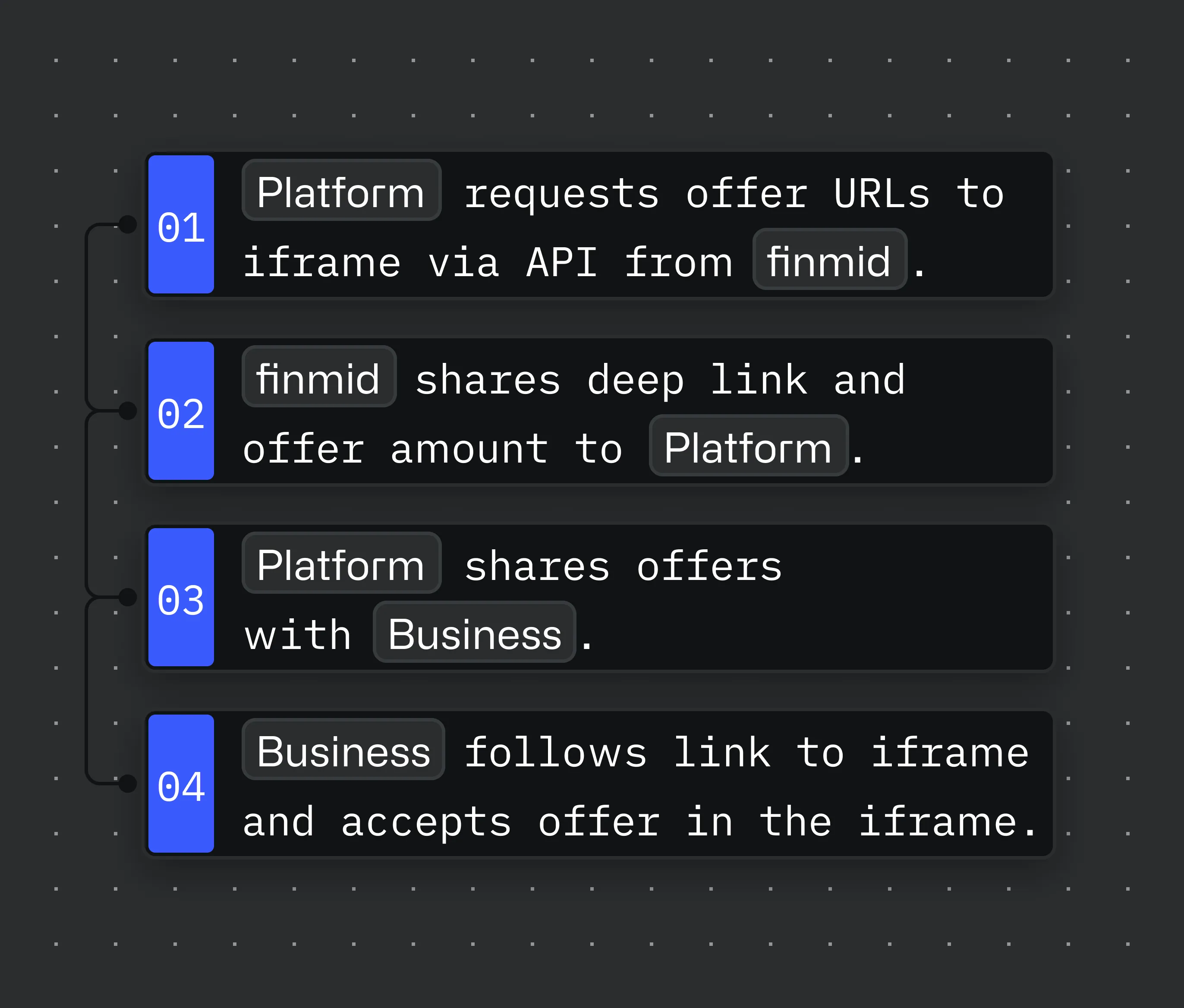
When a merchant is eligible for financing, the platform retrieves a unique link from finmid for that specific merchant and offer. That link loads finmid’s entire financing flow inside the iframe, in the platform’s brand. The merchant never leaves the platform’s product.
A few things happen in the background that the platform never has to configure. The flow renders in the merchant’s language automatically. When finmid updates the flow, every platform receives the update.
The initial setup takes around 12 lines of code and is done once. After that, the platform does not need to touch it.
For a full technical breakdown of the integration, see finmid's API documentation.
Why is iframe a good option for platforms?
-
1.
Low integration effort, no maintenance
A frontend engineer typically needs less than a few hours to get the iframe live. After that, finmid maintains the flow and every platform receives the updates automatically. It means no extra financial engineering maintenance, since finmid controls and maintains everything seen in the iframe.
-
2.
Security and data isolation
When a merchant accepts a financing offer, the identity checks, payment details, and verification all happen inside finmid’s system. The platform receives a confirmation at the end. It does not handle, store, or process the sensitive data in between, which reduces both compliance overhead and security risk.
-
3.
Fully branded without design work
Before any platform goes live, finmid confirms the designs in the iframe with the partner to ensure that the experience is natural for the user inside the platform environment. Font, colour scheme, border radius are customised for the offer to appear as if the platform built it.
-
4.
More trust, better conversion
An offer that appears inside a familiar interface is easier to trust than one that arrives via email and opens on an unfamiliar page. Based on finmid’s internal data, merchants are up to 4x more likely to take financing when the financing process happens inside the platform.
Where could the iframe fall short?
No integration is right for every platform, and it is worth being transparent about the limits.
-
1.
It still requires engineering effort
A frontend engineer needs to invest time to get the iframe embedded. It is low effort by integration standards, but not zero.
-
2.
Customisation has limits
Platforms that want deeper control over every detail may find that insufficient. For those cases, finmid’s full API integration gives the platform complete ownership of the experience.
-
3.
Interdependence
The platform does not own the flow. finmid builds and maintains it, which means the platform cannot change it without going through finmid first.
What are the alternative integration options to the iframe?
There are two alternatives to iframe: manual link flow and full API integration.
With a manual link flow, finmid generates the offer; the platform delivers it via email. There is no frontend integration required. But the merchant leaves the platform to accept the offer, and that break in context shows up in conversion.
Full API integration means that the platform builds its own financing UI on top of finmid’s APIs, with complete control over every screen. This is the right choice for platforms with the engineering capacity to build and maintain the experience end to end. It takes longer, and it means the platform owns every update.
The iframe sits between these two alternatives. It delivers an in-product experience without the engineering overhead of a full API build, making it a practical starting point. A platform can always move to a full API integration later, without switching providers or interrupting the lending programme.
Why we built the iframe
Platforms launching embedded lending do not need to build a financing flow from scratch. The iframe exists so they do not have to. A fully branded, in-product experience, live in days, without the engineering overhead of owning it.
Curious to see how embedded lending could work for your platform? Book a demo.
finmid is the embedded lending infrastructure powering platform growth. With its API, finmid enables platforms to launch tailored financing products for their business customers at scale. Across industries, borders, and business models, finmid drives revenue, improves retention, and fuels core business growth. finmid is trusted by Europe’s most ambitious platforms, including Wolt, Delivery Hero, Just Eat Takeaway, Glovo, and FREENOW. Learn more at finmid.com.